From WikiWikiWeb to Wikipedia: The Evolution of Collaborative Content
In the vast landscape of the internet, few concepts have revolutionized the way we create and consume information as profoundly as the
wiki. What began as a simple, ingenious tool for sharing software design patterns rapidly blossomed into a global phenomenon, culminating in Wikipedia, the world's largest and most accessible online encyclopedia. This journey from a niche software utility to a cornerstone of collaborative knowledge stands as a testament to the power of collective intelligence and accessible technology. At its heart, a wiki is more than just a website; it's a dynamic ecosystem where content is not merely published but organically grown, edited, and refined by its community, directly through a web browser.
The Genesis of the Wiki Concept: Ward Cunningham's Vision
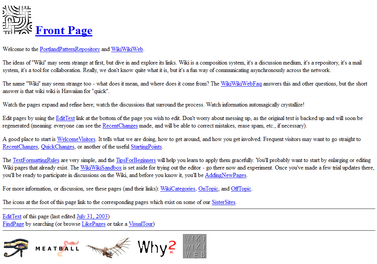
The story of the wiki begins not with a sprawling encyclopedia, but with a brilliant insight from American computer programmer Ward Cunningham. In the early 1990s, Cunningham sought a faster, more agile way for the Portland Pattern Repository community to document and share software design patterns. Frustrated with traditional, rigid documentation methods, he envisioned a system that would allow users to easily create and modify content without needing specialized technical skills or waiting for a central authority.
His innovative solution, launched on March 25, 1995, was named WikiWikiWeb. The peculiar name itself has an interesting origin: while observing the "Wiki Wiki Shuttle" at Honolulu International Airport, Cunningham was struck by the Hawaiian word 'wiki,' meaning 'quick.' This term perfectly encapsulated his ambition for the new system's rapid editing and collaborative capabilities. WikiWikiWeb was a groundbreaking achievement – the very first user-editable website, hosted at c2.com. Cunningham himself famously described it as "the simplest online database that could possibly work," a deceptively humble statement for a technology that would soon empower millions. This initial implementation laid the foundational principles for all subsequent wikis: ease of creation, seamless editing, and an inherent trust in collective contribution.
Understanding the Core Mechanics of a Wiki
At its technical core, a
wiki is powered by specialized software, often referred to as a "wiki engine." These engines serve as a unique form of content management system (CMS), yet they diverge significantly from more traditional web platforms like blog software or static site generators. The primary distinction lies in their decentralized nature: content creation in a wiki typically occurs without a predefined owner or a hierarchical leader. Instead, the structure and organization of information are allowed to emerge organically, driven by the needs and contributions of its users.
The accessibility of content creation is a hallmark of wiki technology. Users can typically write and edit pages using a lightweight markup language, which is far simpler than HTML and quickly learned. For those who prefer a more intuitive experience, many modern wiki engines also incorporate rich-text editors, offering a familiar, word-processor-like interface. This browser-based editing capability means that anyone with internet access and the appropriate permissions can contribute, eliminating technical barriers to participation.
Key features that define the wiki experience include:
- Browser-Based Editing: The ability to create, modify, and manage content directly within a web browser, often without needing any HTML knowledge.
- Lightweight Markup Language: A simplified syntax for formatting text, creating links, and structuring content, making editing quick and accessible.
- Automatic Internal Linking: Wikis inherently encourage the creation of interconnected content. Many engines facilitate this through conventions like CamelCase (e.g., "HomePage"), automatically turning such phrases into links to new or existing pages.
- Robust Revision Control: Every change made to a wiki page is typically recorded. This version history allows users to track all revisions, compare different versions, and crucially, revert to previous states if errors occur or undesirable edits are made. This system fosters a sense of accountability and trust within the collaborative environment.
- Access Control and Permissions: While many wikis are open to the public, others offer granular control over functions. Editing rights can be assigned to permit changing, adding, or removing material, while some wikis may allow full public access without enforcing stringent access control. This flexibility enables wikis to function effectively in diverse settings, from fully open community projects to private corporate intranets.
- Interactive and Collaborative Tools: Beyond content creation, wikis often include features for users to interact, hold discussions about page content, and coordinate their collaborative efforts, fostering a true community around shared knowledge.
These elements collectively foster an environment of open collaboration, built on the theory that collective knowledge is inherently more powerful and accurate than individual contributions. To dive deeper into these functionalities, consider exploring
Key Features of Wikis: Collaboration, Revision History, and Content Management.
Wikipedia: The Catalyst for Mainstream Wiki Adoption
For several years, the
wiki remained largely a niche tool, predominantly utilized by software developers and specific technical communities. Its true potential for large-scale public collaboration wasn't fully unleashed until the launch of Wikipedia in January 2001. Founded by Jimmy Wales and Larry Sanger, Wikipedia adapted Cunningham's wiki technology to an ambitious, unprecedented goal: to build a free online encyclopedia, encompassing all human knowledge, in every language, and entirely driven by volunteers.
The success of Wikipedia was nothing short of monumental. It demonstrated that wiki technology was not only scalable for projects with millions of articles but also incredibly robust in managing a massive, distributed, volunteer-driven editorial process. Wikipedia rapidly grew into one of the internet's most popular websites, consistently ranking among the top global destinations since at least 2007. It's important to note that Wikipedia is not a single wiki but rather a vast collection of hundreds of wikis, with each one dedicated to a specific language, forming a truly global repository of information.
The unprecedented success of Wikipedia fundamentally propelled the concept of the
wiki into mainstream consciousness. Suddenly, the world understood the power of open, browser-based collaboration. This influence extended far beyond encyclopedias, inspiring countless applications across various sectors. Enterprise knowledge bases, allowing companies to document internal processes and share information efficiently, began to leverage wiki software. Project management tools incorporated wiki-like functionalities for collaborative documentation. Even social platforms started to integrate elements of shared content creation. The word "wiki" itself became so ubiquitous that it was formally recognized in the Oxford English Dictionary, a testament to its profound cultural and technological impact.
Beyond Wikipedia: The Versatility and Impact of Wikis Today
The legacy of Ward Cunningham's initial idea, amplified by Wikipedia's global reach, is evident in the hundreds of thousands of wikis in use today. These range from massive public information resources to highly specialized private databases, showcasing the remarkable versatility of the
wiki framework. Beyond its most famous incarnation, wikis serve a multitude of critical functions:
- Knowledge Management Resources: Organizations of all sizes utilize wikis to create and maintain internal knowledge bases, documenting everything from HR policies and technical specifications to project guidelines and best practices. This ensures that institutional knowledge is easily accessible, editable, and always up-to-date for employees.
- Note-Taking and Personal Information Management: Individuals and small teams use wikis as dynamic note-taking tools, creating interconnected pages of information that can be linked, searched, and revised effortlessly.
- Community Websites: Many online communities centered around specific hobbies, interests, or fandoms leverage wikis to collaboratively build lore, guides, and resources. These wikis become central hubs for shared information and collective storytelling.
- Intranets and Extranets: Within corporate environments, wikis form the backbone of intranets, facilitating internal communication, project collaboration, and document management. Extranets can extend this collaborative capability to external partners and clients.
- Bug Tracking Systems and Development Documentation: Many software development teams integrate wiki functionality directly into their bug tracking and version control systems, providing an easy way to document issues, solutions, and code explanations collaboratively.
The enduring appeal of the wiki lies in its fundamental trust in collective intelligence. It operates on the premise that a community of users, given the tools and the freedom, will collectively produce, refine, and maintain information of higher quality than what any single individual or centralized authority could achieve. This decentralized model not only democratizes content creation but also fosters a powerful sense of ownership and engagement among contributors.
Whether free and open-source or proprietary with advanced control features, wiki engines continue to evolve, offering varying levels of access control and content organization rules. From simple, single-page notes to complex, multi-layered knowledge repositories, the core principle remains: quick, easy, and collaborative content management. For a broader perspective on its definitions and applications, check out
What is a Wiki? Understanding Collaborative Online Content.
Conclusion
From Ward Cunningham's swift solution for software developers to Wikipedia's global digital library, the
wiki has undeniably reshaped the landscape of collaborative content. Its journey is a powerful narrative of how a simple, elegant idea, rooted in the Hawaiian word for 'quick,' could blossom into a technology that empowers millions to create, share, and manage information on an unprecedented scale. More than just a website, the wiki embodies a philosophy of open collaboration, continuous improvement, and the profound belief that collective knowledge is humanity's most valuable asset. As the digital world continues to evolve, the principles embedded in wiki technology will undoubtedly remain central to how we build, learn from, and share our ever-expanding universe of information.